U.S. visitor visa invitation letter
For U.S. citizens, green card holders and visa holders inviting family or friends on a B-2 visitor visa.
Do you need one? Usually not.
- A B-2 visitor visa does not require an invitation letter. The consular officer decides on the visitor’s own situation: their ties at home, their finances and the interview.
- A short, factual letter can still help the visitor explain the trip if the officer asks: who they are visiting, for how long, and where they will stay.
- Form I-134 (declaration of financial support) is not a B-2 requirement. Bring it only if the embassy asks for it.
What the letter covers
- Your name, address, status in the U.S. and job.
- Each guest’s name, date of birth, relationship to you and home address. No passport numbers.
- Purpose of the visit, arrival and departure dates, where they stay.
- Who pays: you, the guest, or shared.
- A list of what to bring to the interview.
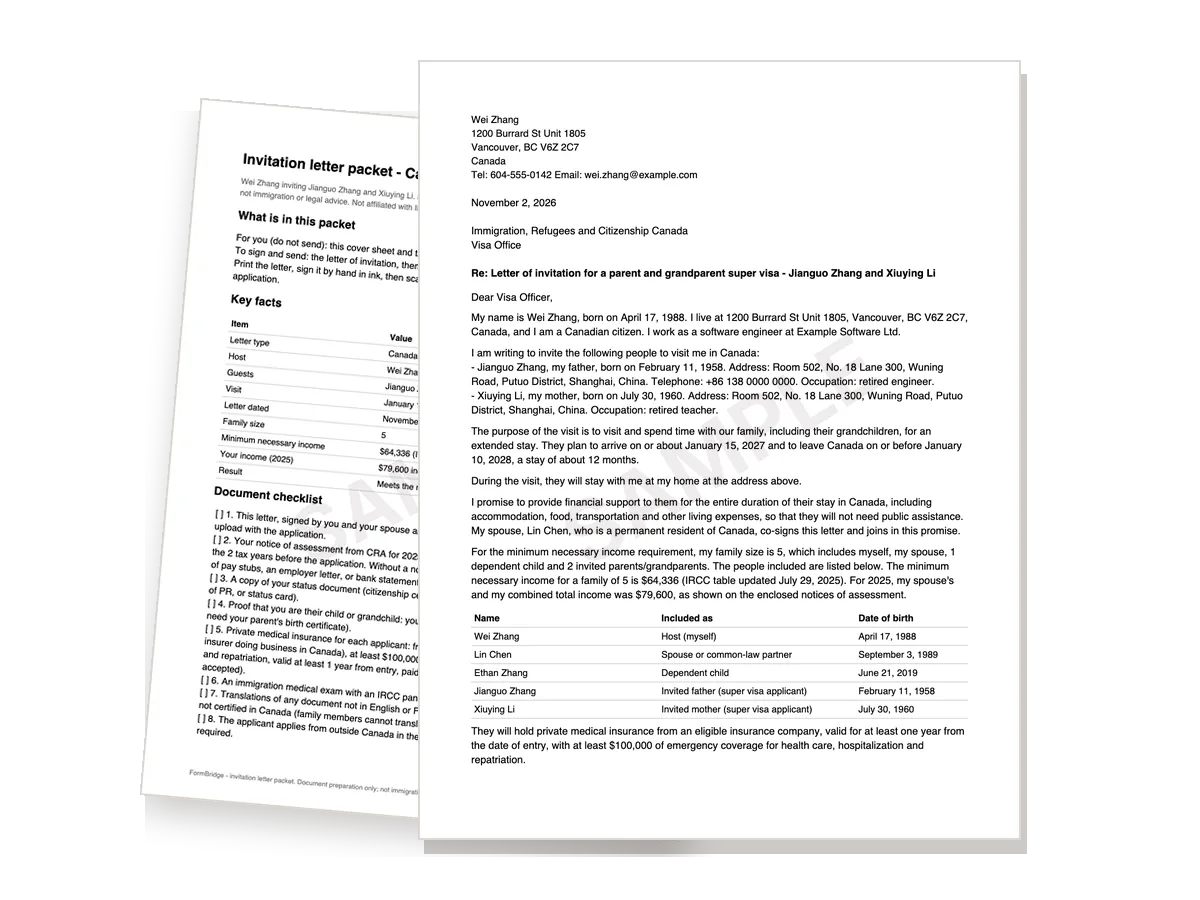
What you get
FAQ
- Is an invitation letter required for a U.S. B-2 visa?
- No. A B-2 visitor visa does not require an invitation letter, and it does not decide the outcome. The officer looks at the applicant’s own ties, finances and travel plan at the interview.
- Do I need to file Form I-134 for my parents’ visitor visa?
- Not as a rule. Form I-134 is not required for a B-2 visa. If you pay for the trip, a recent pay stub or tax return can show it; follow the embassy’s instructions if they ask for more.
- Can a green card holder or H-1B holder invite parents?
- Yes. Anyone in the U.S. can write an invitation letter. The letter states your status; the visa decision is about the visitor, not the host.
- Should the letter be notarized?
- There is no rule that a B-2 invitation letter must be notarized. Sign it by hand and give the visitor a copy along with a copy of your status document.
Document preparation only, not immigration or legal advice. In Canada only licensed immigration consultants (RCICs) and lawyers may give immigration advice for a fee (IRPA s. 91). Not affiliated with IRCC, the U.S. Department of State or any embassy. A letter of invitation does not guarantee a visa; the visa officer decides.