Translate a document for USCIS
One page at a time: photo in, English draft out. You review every line, a bilingual person signs the certificate. Your draft stays in this browser.
Who signs the translation
USCIS asks for a full English translation plus a statement from the translator that they are competent in both languages and that the translation is complete and accurate (8 CFR 103.2(b)(3)). The translator does not need to be a professional, and no notary is needed. The rule does not bar you from translating your own documents, but a translation certified by the applicant or beneficiary invites doubts, so ask a bilingual friend, relative or colleague to review the draft and sign.
Canada (IRCC) is different: it requires a certified translator or a sworn affidavit. This tool does not cover IRCC translations.
Self-help translation tool. The AI draft must be checked line by line by the person who signs the certificate. Not legal advice; not affiliated with USCIS. We are not a translation agency and do not certify translations.
What you get
Questions before you start
- How much does it cost?
- $25 a page, or $59 for 3 pages. A household register or a two-sided certificate usually counts as more than one page.
- How does it work?
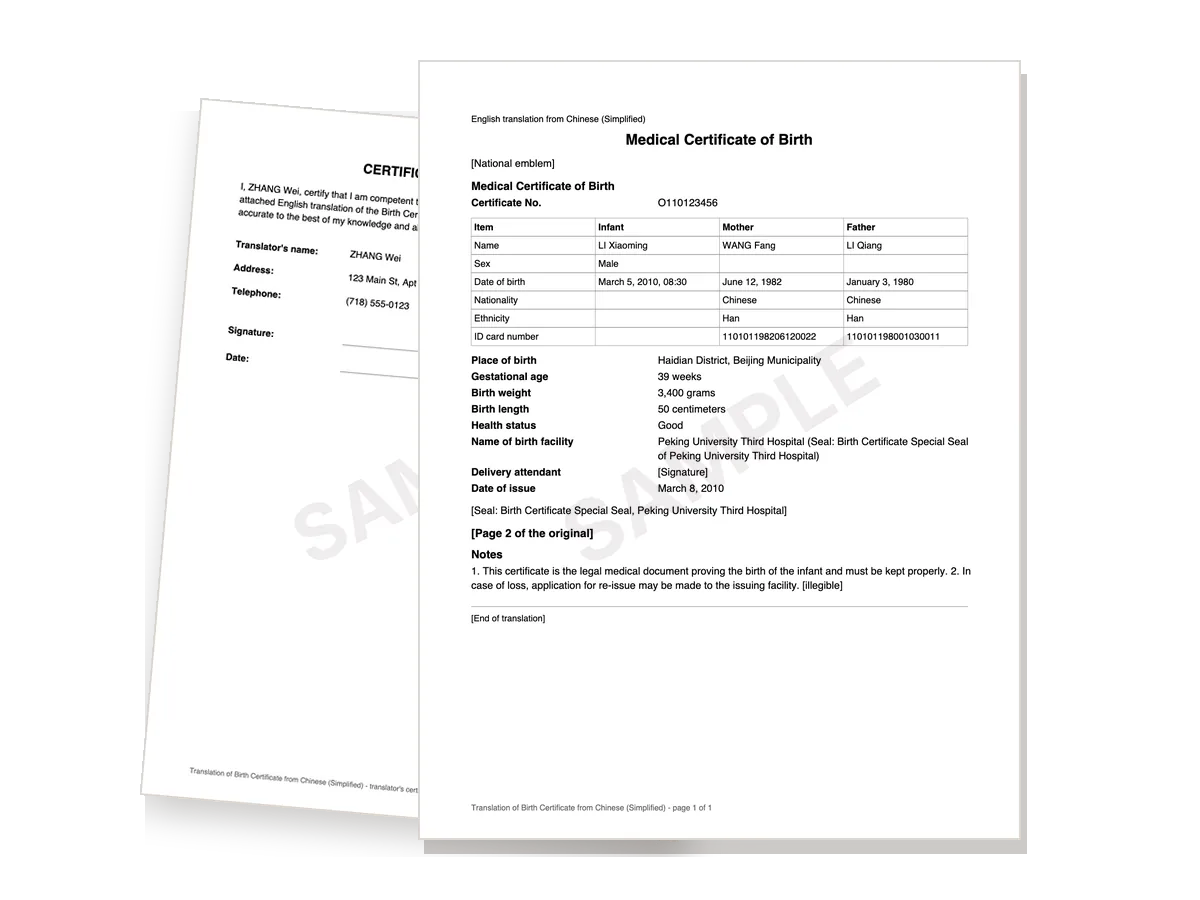
- Photograph a Chinese or Spanish certificate. You get a structured English draft, review every line against the original, and download the translation with a Certificate of Translation for a bilingual person to sign.
- Who can sign the certificate?
- USCIS asks for a full English translation and a certification from a translator competent in both languages. No agency, ATA membership or notary is required. It is better if the signer is not the applicant or beneficiary.
- Is a notarial certificate (公证书) already translated?
- Often it includes the notary office’s own English translation. Read it against the Chinese before relying on it.